QUICK ANSWER
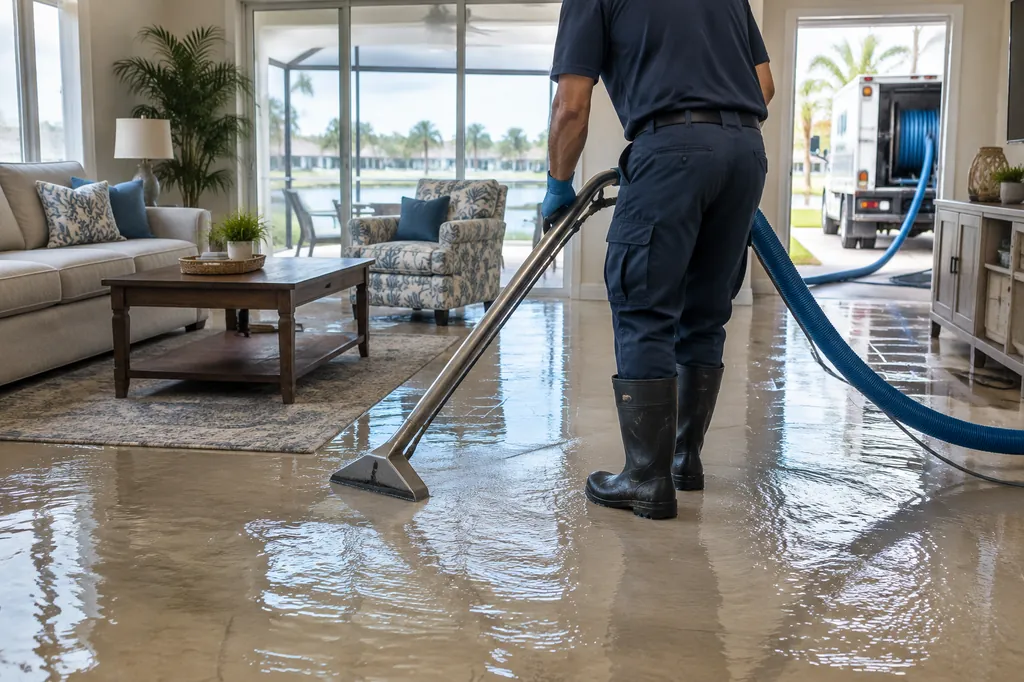
Water damage restoration is the process of stopping the water source, removing standing water, drying the structure with dehumidifiers and air movers, measuring moisture until materials are dry, and then repairing what was removed. Speed matters: EPA guidance is to dry wet materials within 24 to 48 hours to help prevent mold.
What should you do in the first few hours after water damage?
- Stop the source if it is safe. Shut off the main water valve or the appliance supply. If water is near outlets or the panel, keep out and call the utility or an electrician.
- Document before cleanup. Take photos and video of the water, the source and damaged belongings.
- Call your insurer to report the loss and ask what they need from you.
- Move valuables and furniture off wet floors if you can do so safely.
- Arrange professional drying so moisture hidden in walls, flooring and cabinets is measured, not guessed.
What does water damage restoration include?
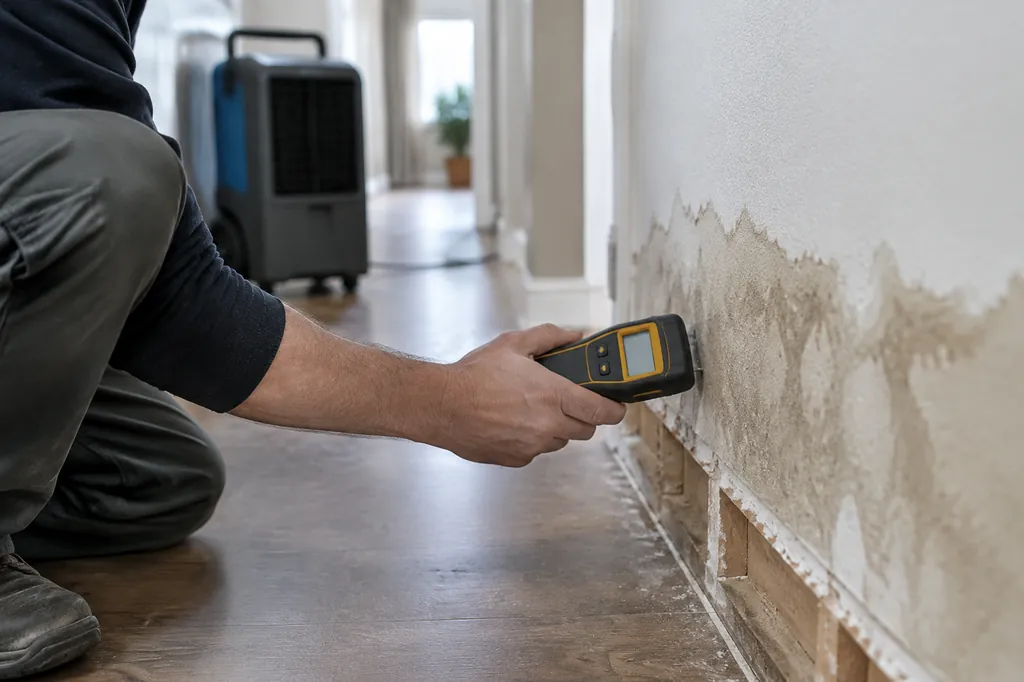
A typical scope moves through stages. Ask the provider which stages are in the quote and which are separate.
- Inspection and moisture mapping: meters and thermal tools to find where water travelled.
- Water extraction: removing standing water from floors, carpet and pad.
- Controlled demolition: removing wet drywall, baseboards or insulation that cannot be dried in place.
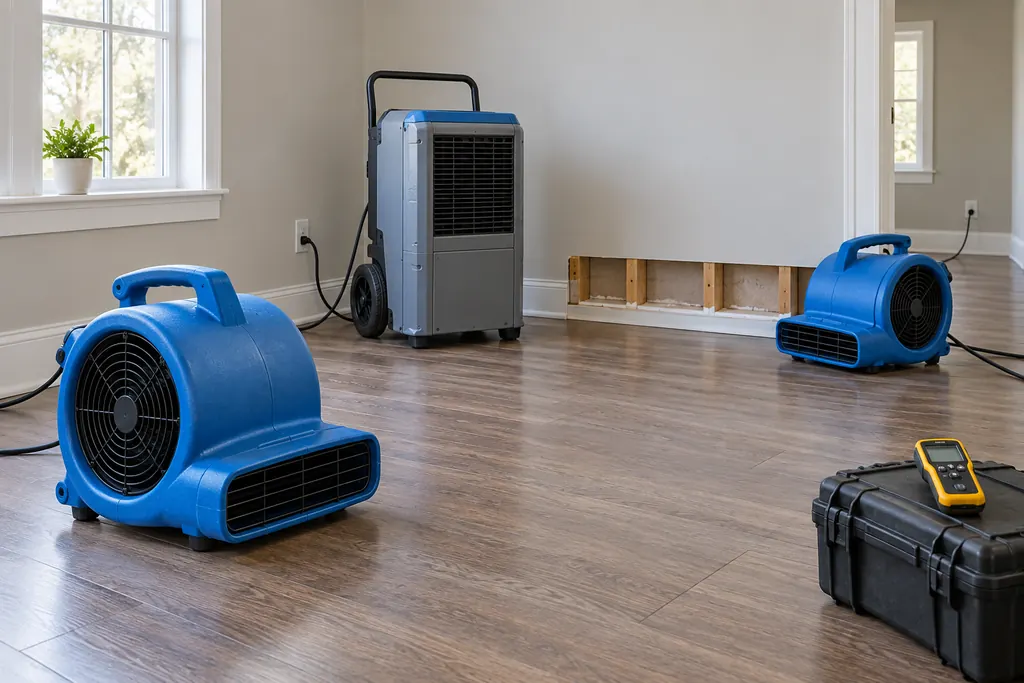
- Structural drying: dehumidifiers and air movers, with readings recorded until materials reach a dry standard.
- Cleaning and antimicrobial treatment where contamination is a concern.
- Rebuild: drywall, flooring and cabinets, often by the same company or a separate contractor.
Clean, gray or black water: why the category matters
The IICRC S500 standard groups water into three categories. Category 1 comes from a clean source such as a supply line. Category 2, gray water, carries some contamination, for example from a dishwasher or washing machine. Category 3, black water, is grossly contaminated, such as sewage backup or outside floodwater. Water that sits can move up a category, and higher categories usually mean more removal of porous materials.
Water damage and insurance in Florida
Many Florida homeowners policies cover sudden and accidental water damage but exclude flood from rising surface water, gradual leaks and lack of maintenance. Flood coverage usually requires a separate NFIP or private flood policy. Since January 1, 2023, assignment of benefits is generally unavailable on newly issued Florida residential policies, so ask how billing will work before signing. This website does not give insurance or legal advice.
Questions to ask a water damage company
- How will you find and record hidden moisture?
- What drying goal will you use, and how will I see the readings?
- Which materials will be removed, and why?
- Is rebuild included or separate?
- How do you work with my insurance company?
Compare water damage cost factors, then check the local pages below.
Water damage help by city
These cities have ZIPs listed in the partner network’s Water Damage directory as of October 6, 2026. Availability still has to be confirmed for your exact property.
Hillsborough County
Apollo BeachBrandonGibsontonLithiaLutzOdessaPlant CityRiverviewRuskinSeffnerSun City CenterTampaValrico
Pinellas County
ClearwaterDunedinIndian Rocks BeachLargoOldsmarPalm HarborPinellas ParkSafety HarborSeminoleSt. PetersburgTarpon Springs
Pasco County
Dade CityHolidayHudsonLand O' LakesNew Port RicheyPort RicheySpring HillWesley ChapelZephyrhills
Polk County
AuburndaleBartowDavenportHaines CityLake WalesLakelandWinter Haven
Sarasota County
EnglewoodNokomisNorth PortOspreySarasotaVenice
Manatee County
BradentonEllentonPalmettoParrish
Frequently asked questions
How fast should water damage be dried out?
Does homeowners insurance cover water damage in Florida?
What is the difference between clean water, gray water and black water?
Can I sign over my insurance benefits to the restoration company?
Will water damage turn into mold?
Are you the company doing the work?
Sources and further reading: EPA guidance, FloodSmart.gov (NFIP), Florida DBPR license lookup. General information, not a property assessment.