QUICK ANSWER
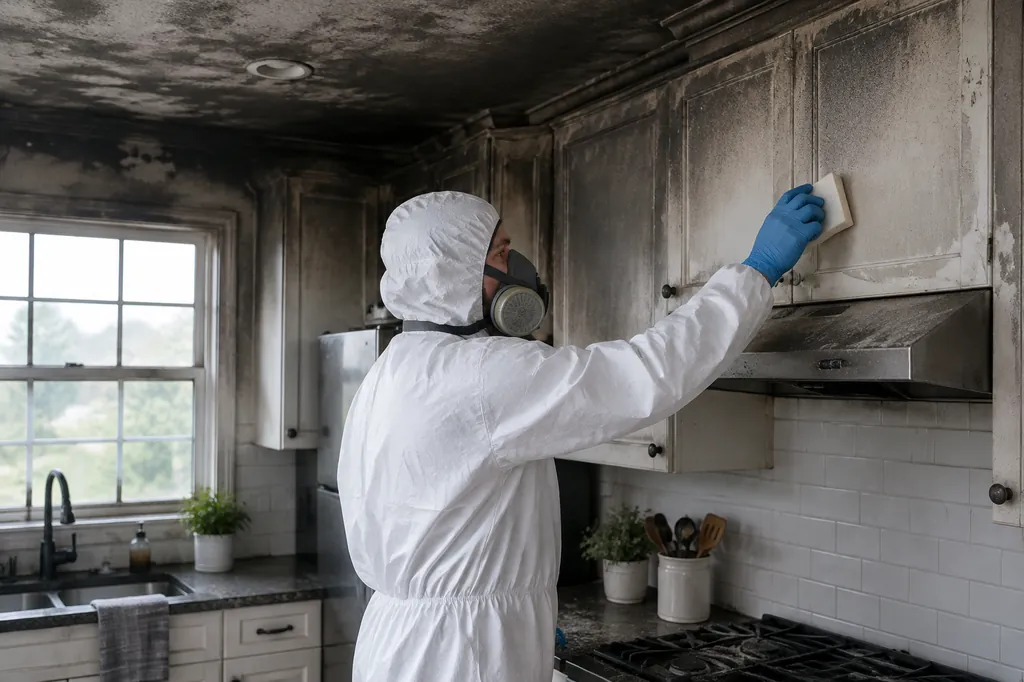
Fire damage restoration is the work of securing the property, removing water used to fight the fire, cleaning soot and smoke residue from surfaces and contents, controlling odor, and rebuilding what burned. Start only after the fire department clears entry, and report the loss to your insurer right away.
What should you do in the first 24 hours after a house fire?
- Wait for clearance. Do not re-enter until fire officials say it is safe.
- Call your insurer and ask about temporary housing and what documentation they need.
- Secure the property. Broken windows, doors and roof openings should be boarded or tarped to prevent weather damage and entry.
- Document everything with photos and video before anything is thrown away.
- Avoid wiping soot or running HVAC until a professional advises; both can spread residue.
Securing the property: board-up and tarping
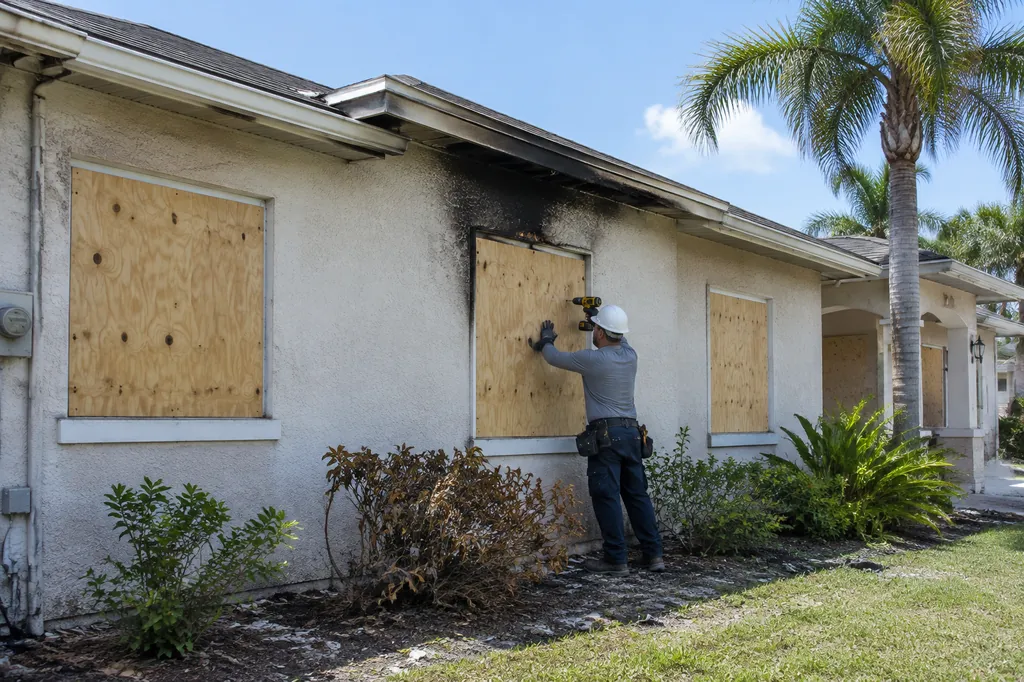
Openings left by the fire or by firefighters let in rain, animals and intruders. Many restoration companies offer emergency board-up and roof tarping. Ask whether it is billed separately and whether your policy expects you to take reasonable steps to protect the property.
Soot and smoke residue are not all the same
Restorers often describe residues by how they behave. Dry smoke from fast, hot fires leaves powdery residue; wet smoke from smoldering plastics is sticky and smears; protein residue from kitchen fires is nearly invisible but has a strong odor; and fuel-oil soot comes from furnace puff-backs. The residue type affects cleaning methods, so ask how the provider will test and clean each surface.
Smoke odor removal
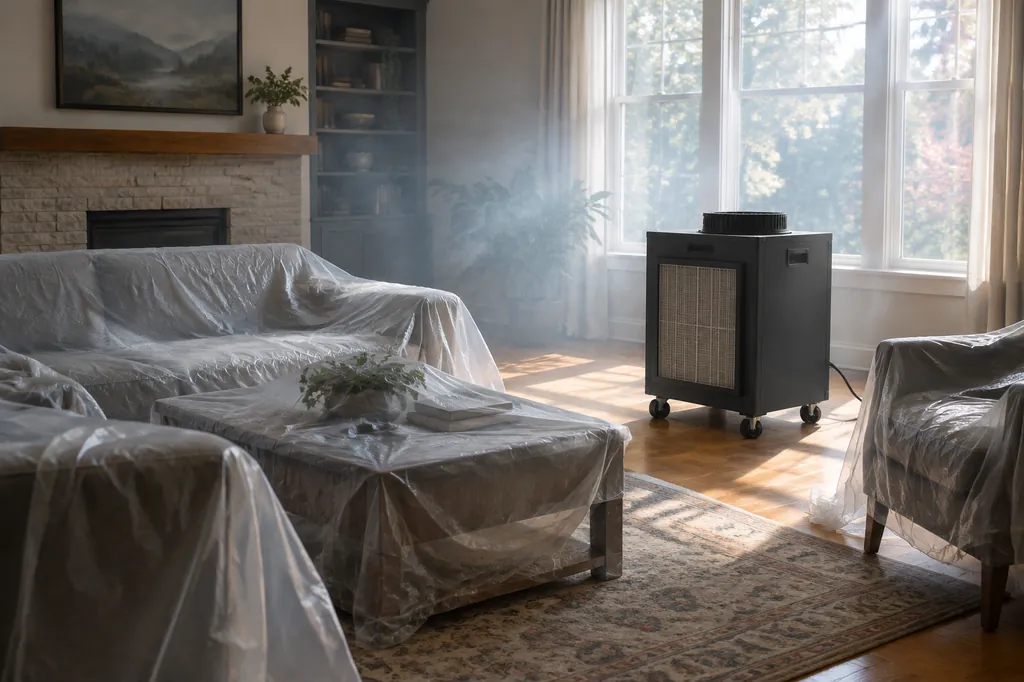
Odor control works best after residue is removed. Providers may use HEPA air scrubbers, thermal fogging, ozone or hydroxyl generators and sealing primers. Ask which method is proposed, whether anyone must stay out of the home during treatment and how results will be checked.
Water from firefighting
Hoses and sprinklers can leave as much water damage as a leak. That water needs extraction and structural drying. See the water damage restoration guide for what drying should include.
Questions to ask a fire damage company
- Do you handle board-up, cleaning and rebuild, or only part of it?
- How will you handle contents: on-site cleaning or pack-out?
- How will odor removal be verified?
- What applicable Florida license covers the rebuild?
- How do you document the loss for my insurer?
Compare fire damage cost factors, then check the local pages below.
Fire damage help by city
These cities have ZIPs listed in the partner network’s Fire Damage directory as of October 6, 2026. Availability still has to be confirmed for your exact property.
Hillsborough County
Apollo BeachBrandonGibsontonLithiaLutzOdessaPlant CityRiverviewRuskinSeffnerSun City CenterTampaValrico
Pinellas County
ClearwaterDunedinIndian Rocks BeachLargoOldsmarPalm HarborPinellas ParkSafety HarborSeminoleSt. PetersburgTarpon Springs
Pasco County
Dade CityHolidayHudsonLand O' LakesNew Port RicheyPort RicheySpring HillWesley ChapelZephyrhills
Sarasota County
Frequently asked questions
When can I go back into my home after a fire?
What does fire damage restoration include?
Why does a fire leave water damage too?
Can smoke odor be removed completely?
Should I hire a public adjuster after a Florida fire?
Are you the company doing the work?
Sources and further reading: American Red Cross recovery guidance, Florida Department of Financial Services consumer help, Florida DBPR license lookup. General information, not a property assessment.